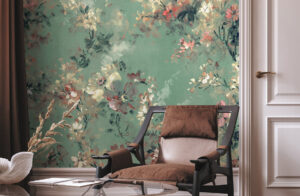
For a long time, ornament was regarded as a relic of the past—too decorative, too elaborate, too deeply rooted in history. Minimalism came to dominate our interiors: clean lines, calm surfaces and restrained colour palettes. But in recent years, a clear shift has emerged. Patterns are making a comeback. And with them, ornament itself.
Series such as Bridgerton have helped fuel this revival. Luxurious fabrics, floral wallpapers and richly detailed interiors have suddenly made the nineteenth century feel less outdated and far more inspiring. What these settings celebrate is more than nostalgic romance. They are a tribute to decoration—to craftsmanship, symmetry and the beauty of carefully considered detail.
Ornament as Cultural Heritage
As early as the nineteenth century, William Morris, one of the leading figures of the Arts and Crafts movement, saw ornament as far more than decoration. For him, it was an expression of values. His floral designs, inspired by nature, followed clear compositional principles and reflected a profound belief: good design should be both beautiful and meaningful.
That philosophy continues to resonate today. Flowing vines, blossoms and birds evoke a connection with nature, celebrate craftsmanship and embody an aesthetic that unfolds quietly rather than demanding attention.
Why We Are Embracing Patterns Again
In a world that increasingly feels digital, polished and uniform, our desire for texture, depth and authenticity is growing. Ornament offers exactly that. It creates atmosphere, introduces movement to surfaces and gives interiors a distinctive character.
This is not about returning to the past in a nostalgic sense. Rather, ornament is being reinterpreted. Colours are carefully balanced, compositions become more refined and traditional motifs are translated into a contemporary design language. The result is an interior that references history without ever feeling like a museum.
Tradition Reimagined
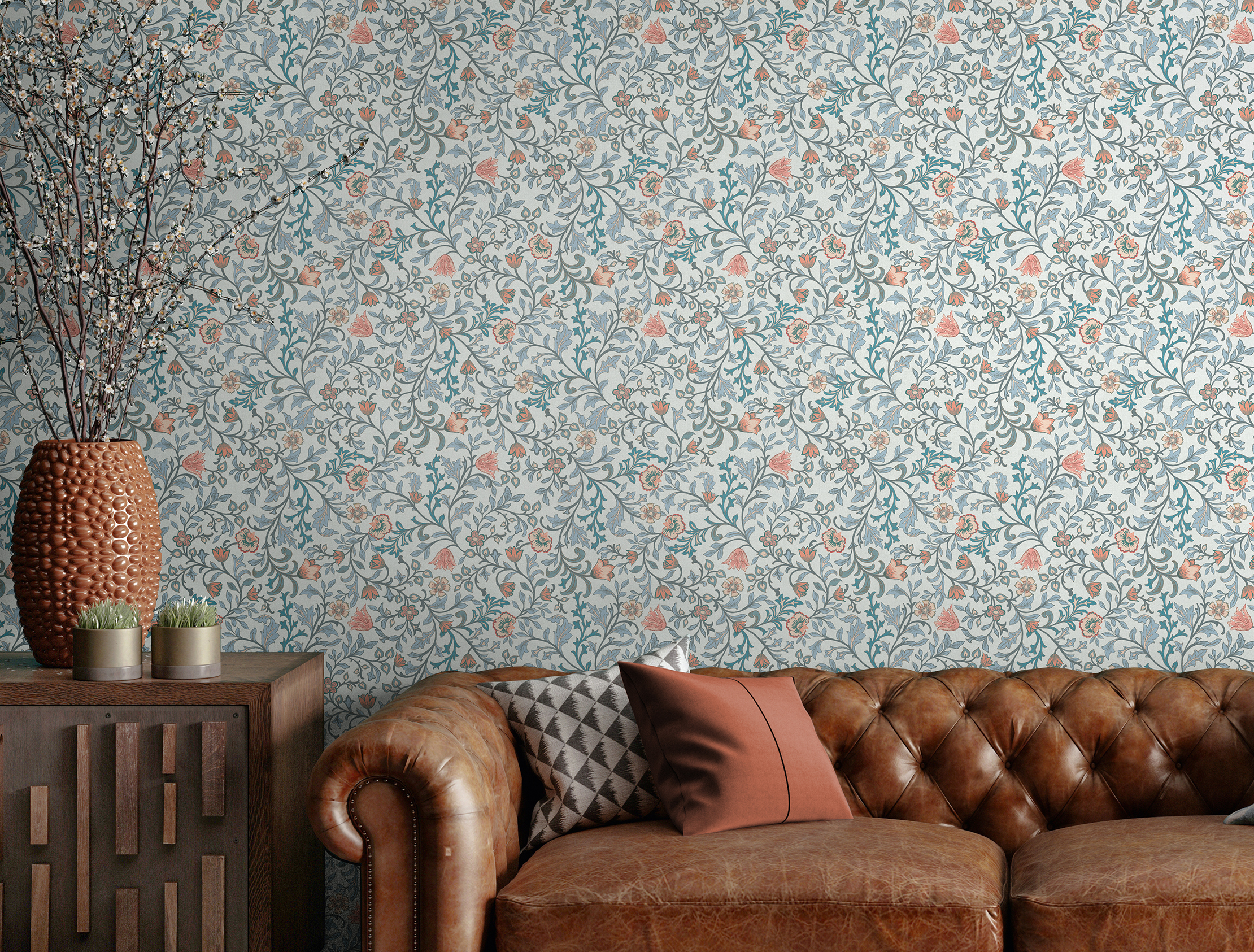
The HERITAGE collection reflects this evolution. Inspired by classic British patterns—from the Arts and Crafts movement to the refined tradition of English wall decoration—it combines lush florals with contemporary restraint. Ornament is not presented as nostalgia, but confidently redefined for modern living. Stripes bring structure, blossoms tell stories and symmetrical compositions create a sense of calm. Past and present enter into dialogue—without ever feeling like costume.
The renaissance of ornament is more than a trend. It reflects a new understanding of how we want to live: interiors are once again allowed to express personality.
And sometimes, that personality begins with a single blossom on the wall.