Wall design in a child’s room is far more than a decorative choice. Children experience spaces differently from adults. They don’t see square metres—they see possibilities. An empty corner becomes a stage, a nook turns into a secret hideaway, and a wall becomes the beginning of a story. This is where thoughtful wall design reveals its true power.
Between Overstimulation and Inspiration
Many children’s rooms are filled to the brim—with colours, patterns, toys and constant visual stimulation. Yet children rarely need more impressions. They need the right ones. Imagination doesn’t grow through constant entertainment. It grows through inspiration. Wall design can play a quiet yet powerful role in this process. A motif becomes the starting point of an adventure. A scene becomes a backdrop. An illustration becomes an invitation to imagine. The room begins to tell a story—and the child continues it.
The Wall as a Space for Adventure
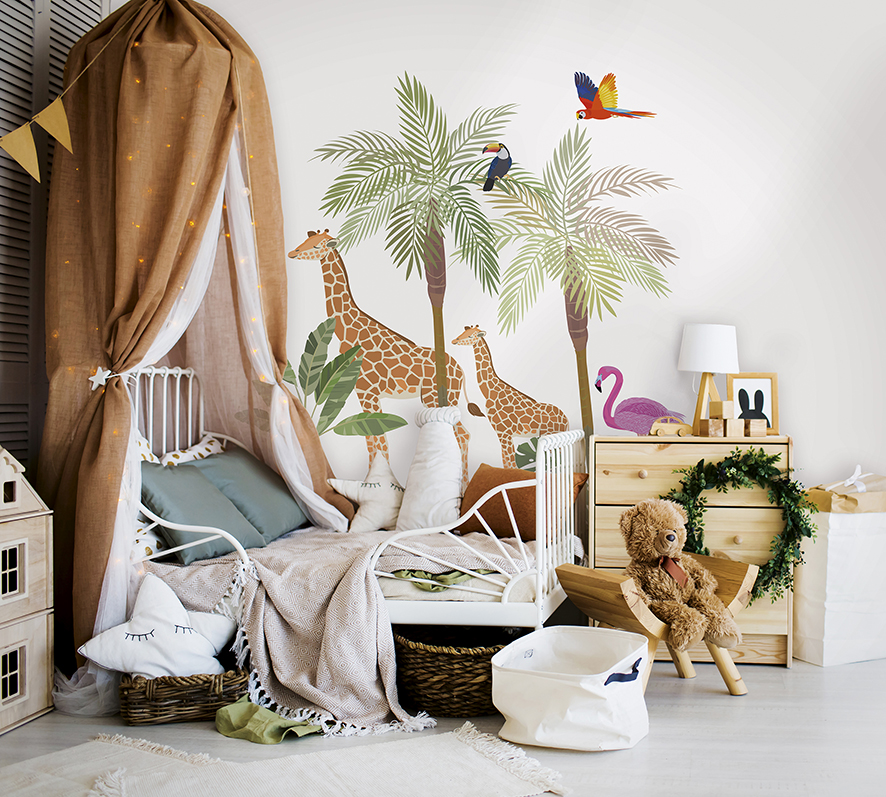
Whether featuring hot-air balloons, forest landscapes or vintage aeroplanes, large-scale motifs create a visual stage for imagination. They give a room its own identity without overwhelming it. The secret lies in balance:
- enough detail to spark curiosity
- enough calm to leave room for imagination
- enough structure to create a sense of security
A well-designed wallpaper is not simply decoration. It becomes a backdrop for growing up.
Spaces Shape Independence
Children understand their surroundings through the spaces they inhabit. A thoughtfully designed room provides security. A calm atmosphere encourages concentration and emotional well-being. The goal is not simply to create something “cute.” A child’s room can have character. It can express personality. And it can evolve as its occupant grows. Gentle nature-inspired motifs create calm. Playful elements encourage curiosity. Graphic compositions introduce structure. The most important thing is that the wall supports the room rather than overwhelming it.
Imagination Needs Space
A great children’s room is not a storage place for toys. It is a place for development. When walls suggest stories, imagination is free to grow. When colours create warmth, children feel secure. When motifs open up new perspectives, confidence begins to flourish. Wall design is therefore never just a decorative detail. It provides the stage on which childhood unfolds. And that stage can be as big as a child’s imagination.